Pandemic Flu Background
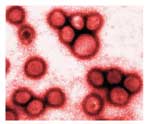 Influenza or "flu" is a highly contagious virus which can infect people and some animals. The normal seasonal flu that spreads among people every year is a strain called H3N2. The germs that cause seasonal flu have been with us for many years. Consequently, our bodies have been exposed to them before in our daily lives and know how to fight the illness when we catch it.
Pandemic flu is different. A pandemic happens when a new strain of flu emerges and people have no immunity to the virus. People who catch pandemic flu can get very sick because their bodies do not know how to fight it off.
A leading candidate to cause the next pandemic is a strain of flu virus called H5N1 (a bird flu). This virus spreads easily among birds and has killed large numbers of them. The H5N1 virus is not highly contagious among humans yet, but it has infected over 300 people worldwide and killed more than half of those infected. While the virus originated in birds, it has been mutating rapidly. It now infects mammals, including people, more readily than it once did. At one point, a person had to inhale the virus deep into the lungs to become infected; now H5N1 has adapted to survive and multiply in the upper respiratory tract, although it is still hard for humans to catch.
What Makes a Pandemic? A pandemic is a worldwide disease outbreak. The average time elapsed between each of the last four flu pandemics was 25 years. The last pandemic, a mild one, was in 1968. For a flu virus to cause a pandemic, three things must happen. It must
- be a virus that people have not been exposed to before, and therefore have no immunity
- be able to cause illness in people
- have the ability to spread easily from person to person
The H5N1 virus meets the first two criteria. Many scientists and health officials are gravely concerned that it will mutate further so that it is able to spread as easily as the seasonal flu. If this happens, a pandemic will begin. Although there are other flu viruses that could cause a pandemic, H5N1 is currently the leading – and most worrisome – candidate.
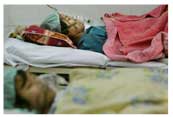 How bad could it be? In a pandemic, it is expected that 20-50% of the world's people will become infected. We do not know how many people will die, but so far, over 60% of the people infected with H5N1 have died – compared to the 2% death rate for the last severe pandemic in 1918.Two percent of the US population today would equal 6,067,670 people dying of influenza – equivalent to all the people in Idaho, Nevada, Washington DC, Wyoming, and Montana dying. We hope that the fatality rate will decrease if/when a H5N1 pandemic begins, but the leading flu scientists have said that it doesn't have to.
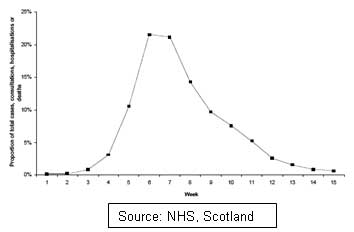
When a pandemic outbreak occurs, the virus can spread in a community for about three months. This period is called a wave, and is modeled in the graph above. After three months, the virus tends to go away as people either get well, die, or are naturally immune. Influenza viruses constantly mutate. This is why a new flu shot is needed every year or two because each mutation is slightly different. Pandemic viruses also mutate, as the surviving population developed some immunity. In past pandemics, mutation has resulted in two more waves of infection over the course of a year or two. Then the pandemic was generally over, as the surviving population developed some immunity.
During this time, we can expect significant disruption in our lives as people get sick, die, are taking care of loved ones, or are avoiding exposure to the virus. Grocery, heat, water, electricity, sewer, and health care will be severely affected.
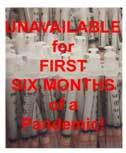 Is there a cure? Some people assume that modern science has a cure for a pandemic virus. Unfortunately, that is not true. Although there are vaccines for "regular" flu, it is unlikely that there will be a vaccine for the first wave of a pandemic. Because flu viruses mutate, a pandemic has to start, before we can begin making a vaccine that will be certain to help. It takes 6 months to make a vaccine, so it will be at least six months after the pandemic starts before any vaccine is available. The first batches of vaccine will be given to critical personnel.
There are drugs called antivirals that may help people survive an H5N1 infection, but they must be given very quickly after symptoms start, or they don't work. There are not enough of these drugs for more than a fraction of the population. There are already signs that H5N1 may be evolving resistance to these drugs.

Make no mistake. There is clear danger here.
This is not a seasonal cold; it is a killer. People will suffer from complications such as pneumonia, and people will die. People will need hospital care in a time when hospitals are overwhelmed and understaffed. Every aspect of our daily lives may be affected.
Pandemic Flu Impact
| "The mounting risk of a worldwide influenza pandemic poses numerous potentially devastating consequences for critical infrastructure in the United States. A pandemic will likely reduce dramatically the number of available workers in all sectors, and significantly disrupt the movement of people and goods, which will threaten essential services…thus each community and industry must be primarily reliant on its own internal resources…" US Department of Homeland Security, "Pandemic Influenza: Guide for Critical Infrastructure and Key Resources." |
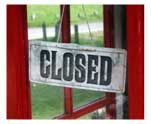 The previous section looked at potential infection and fatality outcomes of pandemic flu. We need now to understand the implications of this medical emergency in the context of our daily lives and to specify what it may mean for you, the reader. Our lives are supported by critical systems: healthcare, electricity, water supply, etc. These are the complex systems we take for granted - until they break. No one thinks of electricity until it goes out. These systems are run, manned and maintained by people. And people get pandemic flu.
Regardless of how many people get sick or die during a pandemic, the US federal government tells us to expect the following:
- Healthcare systems will be quickly overwhelmed as many people will be getting sick, but so will nurses and doctors. This means healthcare might not be available for you or your family. You may need to care for sick family members at home.
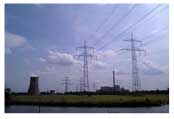
- Electrical supply uncertain. Power plant workers are vulnerable to infection. The support infrastructure, including fuel delivery, is uncertain. Power may be out to homes for days or weeks. You must be prepared to survive and to cope in your home without power.
- Water supply uncertain. Municipal water systems that use chemical treatment face shortages of these chemicals for purification. All municipal systems need electricity. If purification supplies do not arrive on time, you may have to purify your own water. If power is out, you may be without running water. You will need to store your own water and purification supplies.
- Wastewater treatment uncertain. There might not be sewer service available for your home. You need to have arrangements for dealing with waste.
- Transportation system uncertain. Refinery workers are vulnerable to infection, as are the truckers who deliver fuels. Fuel and truckers are necessary for everything from transporting the mail to water treatment supplies to the groceries at the store where you shop. If the transportation fails, shortages will cascade down through every system that we use everyday.
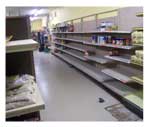
- Shortages of food, medications and other supplies. After decades of using "just-in-time" inventory and manufacturing as a business model, warehousing of finished goods and raw materials has drastically declined. What's in the store is on the shelf. Period. One can see how panic buying results in empty shelves before a hurricane hits. In a pandemic, there will not be supplies coming from other parts of the country.
- Stress on the economic system – locally, nationally and internationally. Federal authorities expect up to 40% of the workforce to be out sick or caring for the sick during a pandemic wave. This is in addition to the supply/delivery problems throughout the system. Some businesses will simply have to close their doors, at least temporarily, which means you may not have a job
 Why is this important?
 Nearly everything in our lives comes from somewhere else. Food, medicine, water, electricity, money and healthcare all require society to be fully functioning in order to bring these goods to you. During a pandemic, these systems will suffer. Some will fail outright. You may find yourself having to work with what you have on hand at the start of the pandemic.
The solution begins with each individual. You must take responsibility for your own survival.
- If you prepare, you are less affected by shortages. You can be warm, dry, well fed, and safe when the pandemic arrives.
- If you prepare, you minimize your chances of infection because you minimize your trips outside the home, where you are exposed to the flu virus.
 To start this process, you will need to have backups in all areas of your life. We recommend citizens store at least three months of basic supplies and low-tech options for household necessities.
Why Prepare for Three Months
On our homepage, we recommend each household have three months of food, water (or purification capability), medications, and other basic supplies on-hand. Let's look at why:
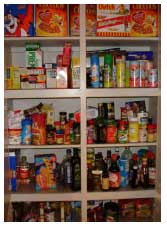
- Adequate preparation minimizes your chances of becoming infected by the pandemic flu virus. When a pandemic outbreak occurs, the virus can be circulating in our communities for up to three months per wave. By stocking the supplies and knowledge that you will need during pandemic, you can reduce your need to go out in public. Staying home reduces your chance of becoming infected or bringing the infection home to your family. The more prepared you are to "shelter in place," the less chance you have of becoming infected. Having three months of food, medicine and other necessities means you can choose to avoid a pandemic wave, while having less than that means that you may have to go out in the middle of a wave for necessities.
- The critical infrastructure is at risk and may not function. The supplies you need might not be available for weeks during a pandemic. Storing supplies now means that you will not be as affected by problems with the infrastructure.
- Government policies and planning assumptions suggest personal preparation is prudent. Two key statements clearly point to the importance of three months of preps:
- The government will NOT take care of your basic needs.
 | "Local communities will have to address the medical and non-medical effects of the pandemic with available resources. This means that it is essential for communities, tribes, States, and regions to have plans in place to support the full spectrum of their needs over the course of weeks or months…" National Strategy for Pandemic Influenza |
- Health directives may be activated, under emergency powers.
 | "The population may be directed to remain in their homes under self-quarantine for up to 90 days per wave of the outbreak to support social distancing practices." US Department of Homeland Security in <Pandemic Influenza: Best Practices and Model Protocols |
- Preparation makes economic sense and helps to ensure that you have an optimal chance of survival. By having three months of preps
- You will be able to care for yourself and your family even when food, water, and medicines are scarce.
- You'll have your own personal savings account. If you start now, you'll be ahead of the price inflation already taking place. You'll also avoid any price gouging on essential items that may occur closer to an actual outbreak.
In terms of its scope, the impact of a severe pandemic may be more comparable to that of war or a widespread economic crisis than a hurricane, earthquake, or act of terrorism. In a localized emergency, such as a hurricane, help can come from other areas of the country. In a pandemic, everyone will be having the same shortages, and outside help will not be available.
The important thing is that sound science and reason strongly suggest that the time to begin preparing is NOW.