Why This Is Important
Good hygiene protects your family from illness and helps minimize exposure to flu virus.
Keep Eating Utensils and Work Surfaces Clean
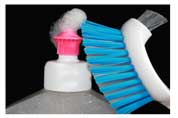
- If water is scarce, scrub dishes with brushes (or clean sand and newspaper) to remove food particles and grease. Then wash in hot, soapy water. Rinse to remove soap. Use dishpans, not the sink, so that wash water can be used for other purposes such as flushing the toilet or watering the garden.
- Use unscented household bleach for disinfecting solutions. These solutions are good for 24 hours ONLY, and must be re-mixed every day.

WARNING:
Do NOT add any product with ammonia to a bleach solution!
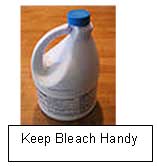
- For dishes and hard, non-porous surfaces, use 1 tablespoon liquid bleach in 1 gallon of water. Wet and then air dry. Do NOT rinse.
- For general disinfecting (floors, counters, etc.), use ¾ cup liquid bleach in 1 gallon of water. Soak small items for 5 minutes. Surfaces such as floors or counters should be wet liberally and kept wet for 2 minutes.
- More info: Clorox® Regular-Bleach
Personal Hygiene
1. Wash hands regularly, especially after using the toilet. Use soap.
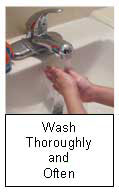
- rub hands together vigorously for 15-30 seconds
- cleanse all sides
- pay attention to nails, rings, watches
- ensure hands are completely dry when done
If water is limited: - the general disinfecting solution listed above is a good hand rinse
- use hand sanitizer with at least 60% alcohol content
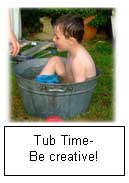 2. Bathing:
 Solar showers are inexpensive and available wherever camping goods are sold. Use a bucket or tote, instead of the tub.
- For warm water, put the water in a black plastic bucket or black-painted soda-pop bottles. Set these in the sun for two hours.
- When you've done bathing, save any bathwater to pour in the toilet for flushing, or use it to do laundry, if the water is not too dirty.
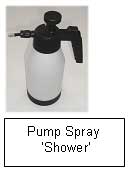
Other Ideas: - Use a new pump garden spray bottle (available in 2 & 4 gallon sizes). Fill with water and use to shower and rinse.
- Spray paint the bottle black to heat the water using solar (sun) heat.
3. Cornmeal or cornstarch can be used as dry shampoos. Sprinkle liberally in the hair, and then brush vigorously.
4. Use only boiled or purified water for brushing your teeth or cleaning contact lenses.
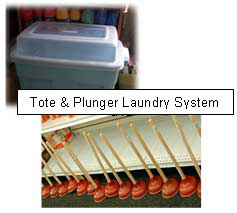
Doing Laundry Without Electricity
1. Use rubber or plastic tubs or buckets and a clean Household plunger. - Put water, detergent, and clothes in tub.
- Cut a hole in the lid for the plunger handle (the agitator).
- Soak the clothes.
- Insert the plunger handle through the lid on the bucket and agitate.
2. Use a tub of clear water to rinse the clothes. Some clothes may need hand scrubbing.
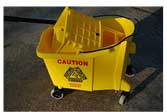 3. Use the wringer of a mop bucket to remove water by hand.
 If you don’t have a mop bucket, wring clothes by hand.
4. Air dry by hanging clothes on lines or hangers. - In winter, you can air dry outside, but you may have to crack ice to remove it from the clothes.
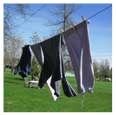
- Other idea: You can hang many things on hangers to dry. You can do this all year long by hanging the clothes over the door frames of the rooms and closets of your house. A pressure rod positioned over a bathtub would allow clothes still fairly wet to drip dry. Clothes wrung out by hand will probably still drip.