In November 2007, the US Department of Health and Human Services (HHS) launched its "Take the Lead" campaign, asking local leaders to help their communities prepare for pandemic flu.
"Preparing for a pandemic influenza outbreak involves everybody. The threat of pandemic influenza is real, and America needs leadership from respected community members to prepare our towns and cities, reduce the impact of pandemic flu on individuals and families, and reduce or even prevent serious damage to the economy."
|
HHS recommends leaders encourage their communities to prepare by storing 2 weeks of food, medication, water and other essential supplies. This is a good start. But once people complete it, they need to continue towards the goal of at least a 3 month supply.
Obtaining three months supplies is doable. See "Small Spaces, Small Budgets" in the
‘downloads’ section of the homepage for affordable ideas. Start with two weeks. Once you've reached this goal, go for four weeks, then eight, and then twelve.
Why We Recommend Three Months
I. Households May Be Sick Longer Than 2 Weeks
II. Three Months May Be The Length of a Pandemic Wave
III. The Critical Infrastructure is at Risk During a Pandemic
IV. Three Months of Supplies Makes Economic Sense
V. Three Months of Supplies Makes Sense for Communities
VI. Respected Institutions Recommend Three Months of Home Stockpiling
VII. Summary
I. Households May be Sick Longer than 2 Weeks
 An infectious disease takes time to spread through a family or household. Many families see this happen with the common cold: the virus may take up to 6 weeks to go through the entire family, passing from person to person.
In a severe pandemic, according to the CDC, all family members in the household will be asked to stay at home and avoid going to work or the store if a family member is sick, for at least 7 days after the last person started showing symptoms. If a family is large, everyone may be staying home for quite some time until it is clear that no one could still be contagious. A long absence from work may result in a loss of income.
"Members of households with ill individuals may be recommended to stay home for an incubation period, 7 days (voluntary quarantine) following the time of symptom onset in the household member. If other family members become ill during this period, the recommendation is to extend the time of voluntary home quarantine for another incubation period, 7 days from the time that the last family member becomes ill." Community Strategy for Pandemic Influenza Mitigation, Feb. 2007
Use of Nonpharmaceutical Interventions by Pandemic Severity Category |
Even in a mild or moderate pandemic, with very ill children, parents may not wish or may not be able to leave their children, or may be sick themselves and unable to get to the store. Outside help may not be available if an entire community is sick at one time.
For comfort, convenience and peace of mind, it would be a good idea to stock up on the things you would want to get you through a longer time frame than just 2 weeks.
II. Three Months May Be the Length of a Pandemic Wave
Infectious disease hits a community in "waves." In a community, at first a few people will be sick, and then many. The peak of infection is the time that a community is hit hardest, where there will be the most sick people and fewest resources. There can be several waves during a pandemic.
Planners at the CDC are planning for at least 12 weeks per wave in a community for a severe pandemic. See Appendix 6, page 86, Interim Pre-pandemic Planning Guidance
Some government planners basing planning on this 12 week period include:
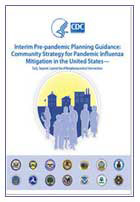 | [Discussing school closures] "In addition, planning for dismissal of students from schools and school-based activities and closure of childcare programs, in combination with means to reduce out-of-school social contacts and community mixing for these children, should encompass up to 12 weeks of intervention in the most severe scenarios." Interim Pre-Pandemic Planning Guidance - CDC |
 | "The population may be directed to remain in their homes under self-quarantine for up to 90 days per wave of the outbreak to support social distancing practices." Pandemic Influenza: Best Practices and Model Protocols – US Department of Homeland Security |
Because a wave may last as long as 12 weeks, schools may be closed, and social distancing may be in effect for at least this length of time. By stocking the supplies that you will need during a pandemic, you can reduce your need to go out in public.
- Staying home reduces your chance of becoming infected or bringing the infection home to your family.
- "Sheltering In Place" would eliminate your chance of becoming infected completely.
The more supplies you have at home, the more effectively you can protect yourself and your family during a pandemic.
III. The Critical Infrastructure is At Risk During a Pandemic Wave
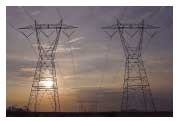
Our lives are supported by critical complex systems: health care, electricity, water, sewer, etc. These are the complex systems we take for granted; however they can break down quickly if people are not there to run them. When workers (or their families) get pandemic flu, the critical infrastructure may degrade or fail. See "About Pandemics" on the homepage for information on how these critical systems affect you personally.
A degraded or failed infrastructure has grave implications, affecting both our personal welfare and the economy. They are inseparable - both need to be healthy for us to get through a flu pandemic.
Our supply chain is complex and fragile. Your breakfast bowl of cornflakes illustrates this. Where did it come from?
The corn was grown (a complex process in itself requiring farm workers and supplies) and then shipped to the factory. Next it was shelled and then put in a steam pressure cooker. From there, it was processed into flakes and packaged, dried (to reduce moisture), and then put through rollers to flatten into a flake. These were toasted briefly in a hot gas oven, sprayed with supplements, and then packaged. All of this requires working machinery and labor, as well as numerous supplies that have to be created elsewhere and delivered to the factory. Your box of cornflakes journeys from the factory warehouse to distributors and finally to your local grocery store. Store workers unload the truck and stock your cornflakes on the shelves, where you can buy them as long as the store is open, the cashier is at work, and the power is on so that the computer inventory systems, the cash registers, and the scanners function. If you pay with plastic, the system must be able to query your bank electronically to approve your purchase.
Your cornflakes were produced by a complex process depending on petroleum, electricity, natural gas, several types of transportation (needing healthy drivers and healthy refinery workers), materials (corn, plastic, cardboard, etc.), and people (such as farmers, laborers, drivers, refinery workers, plant workers, truckers, machinists, stockers and checkers) to keep things going. This complex process requires a near-perfect infrastructure to keep running.
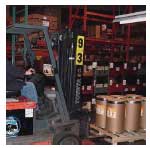 Add to this the "just-in-time" business model adopted universally over the last decades. Supplies are not kept on-site, but rather ordered "just-in-time" from regional warehouses. Consequently, your grocery store has approximately three days of cornflakes on the shelves. The former warehouse is now on wheels.
Finally, during a pandemic, border closings (or restrictions on international or interstate travel and shipping, to slow the spread of flu), will greatly slow or stop lines of supply.
Bottom line: The critical infrastructure is at risk during a pandemic.

- What should businesses do? While most of our infrastructure is privately owned, its continued operation in a pandemic is a matter of national security. The US Department of Homeland Security has written Pandemic Influenza: Guide for Critical Infrastructure and Key Resources, strongly encouraging businesses to build and test pandemic plans. Supply chains may be interrupted for 6 to 8 weeks, and essential workers and processes need to be identified to keep the critical infrastructure running. Many businesses have yet to start, and some solutions are costly.
Link: Pandemic Influenza - Preparedness, Response, and Recovery
- What should you do? Three months of cornflakes would be a good idea. Three months of other basic supplies is also a good idea.
IV. Three Months of Supplies Makes Economic Sense
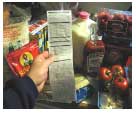
Storing at least 12 weeks of supplies makes excellent economic sense,
particularly for those on tight budgets.
Storing 12 weeks of supplies now will enable you to take advantage of sales at the store and allow you to be able to wait for a sale before restocking.
Your family will also be more protected if you lose your job. Any funds that you have will be able to be put toward other necessities instead of food.
Shelf-stable foods allow you to buy in bulk, which is generally more cost efficient.
Food prices are rising sharply. They will most likely continue to do so due to global economic conditions. By keeping a stock of at least 12 weeks of food, you will be able to not only take advantage of sales as mentioned before, but also will be paying less for food than you will be a couple of months from now.
One last reason is the price gouging that will most likely take place during a pandemic. With supplies uncertain for both the retailer AND the consumer, prices are likely to rise. Stocking now will enable you to get the most for your dollar before any price increases happen.
V. Three Months of Supplies Makes Sense for Communities
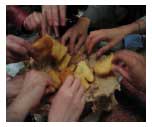
If you have been working towards 3 months of supplies, you will be more likely to have resources to share in a time of need with trusted friends, extended family members, and neighbors.
Essential workers and wage earners will find it easier to report to work if they believe their families have the supplies and provisions they need to get through the pandemic wave.
People who are less worried about meeting their daily survival needs will contribute to greater social order. If a neighbor's child needs to be cared for so the parent can work, for example, you may be more willing to help out if you have already taken care of your own family's food and other basic needs.
VI. Respected Institutions Recommend Three Months of Home Stockpiling
The growing consensus of opinion is leaning towards preparing for long-term disruption.
[US State Department] Due to varying conditions overseas, Americans abroad should evaluate their situation and prepare emergency supplies accordingly (non-perishable food, potable water, medicines, etc.) for the possibility of sheltering-in-place for at least two and up to twelve weeks.
How to Prepare for "Sheltering-In-Place" |
 |
A team of nutritionists and dietitians at the University of Sydney, Australia,
suggests individual households stockpile at least three months of food in preparation for a pandemic. They support their findings with an excellent food chart in the
Medical Journal of Australia.
The US government recognizes that they ("the government") cannot take care of your basic needs.
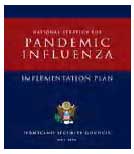 | "Local communities will have to address the medical and nonmedical effects of the pandemic with available resources. This means that it is essential for communities, tribes, States, and regions to have plans in place to support the full spectrum of their needs over the course of weeks or months…" National Strategy for Pandemic |
VII. Summary - Why Three Months
Preparing for three months allows you to face the disruptions that will come with a pandemic in relative safety and comfort. Nearly everything in our lives comes from somewhere else. Food, medicine, water, electricity, money, and health care all require society to be fully functioning in order to bring these goods to you. During a pandemic, these systems will suffer. Some will fail outright. You may find yourself having to work with what you have on hand at the start of the pandemic. The more supplies you have, the more choices you have.
The solution begins with each individual. You must take responsibility for your own survival: Do you want to be hungry during a pandemic? Do you want to have to risk infection to get supplies? Do you want to risk your family? With three months of food, water (or purification capability), medications and other basic supplies, you have the basics to be well fed during a wave, and the tools to replenish supplies between waves. Having more than three months enables you to go even longer or to share with people in need. By stocking food, you will be in charge of your own survival and that of your family.

The important thing is that sound science and reason strongly suggest that the time to begin is NOW.